I Recorded My Meetings. The Agile Community Lost Its Mind.
I published about AI meeting notes and the Agile community came for me. Forgetting curves, weaponized psychological safety, and a dare.
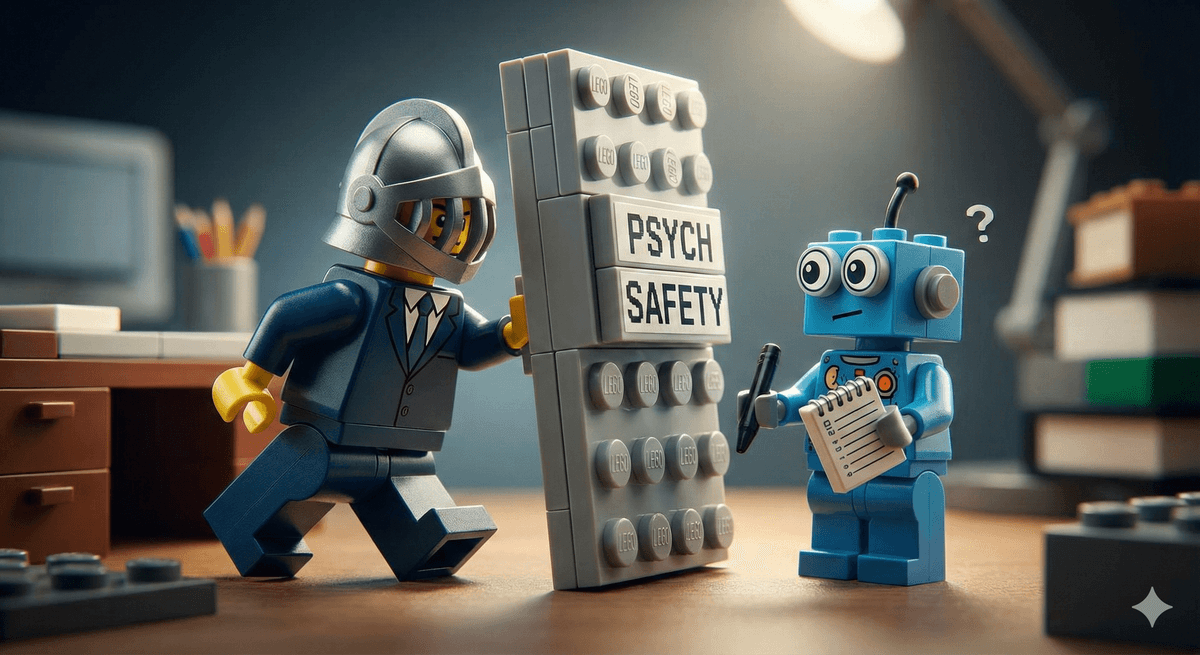
Earlier this week I published "24 Out of 25 Change Agents Chose Not to Change" about offering an AI meeting tool in Teams to 25 Scrum Masters. Three responded. One tried it. The other 24 went silent.
That article hit a nerve.
The comments poured in on LinkedIn. Agile coaches, Scrum Masters, program managers - all weighing in on whether I'd committed some kind of professional malpractice. Some praised the experiment. Others came with pitchforks.
What stunned me wasn't the disagreement. I expected that. What stunned me was who was disagreeing, and why.
The Facilitator Purity Test
Huy Nguyen, an Agile coach in my extended network, wrote something that stopped me cold: "I tell my mentees that if you need AI (or anybody else) to take notes that you rely on, you've failed as a facilitator."
Failed.
Not "could improve." Not "might want to reconsider." Failed. That's a word with weight, and he used it intentionally.
I've been turning this over since the article went live, and I have to be honest - it's a beautiful argument. Clean. Principled. And neurologically impossible.
Hermann Ebbinghaus published his forgetting curve research in 1885. The data hasn't gotten more encouraging since then. People forget 50% of what they hear within one hour. After 24 hours, that climbs to 70%. One week out? Ninety percent is gone. Murre and Dros replicated his findings in 2015 and got nearly identical results.
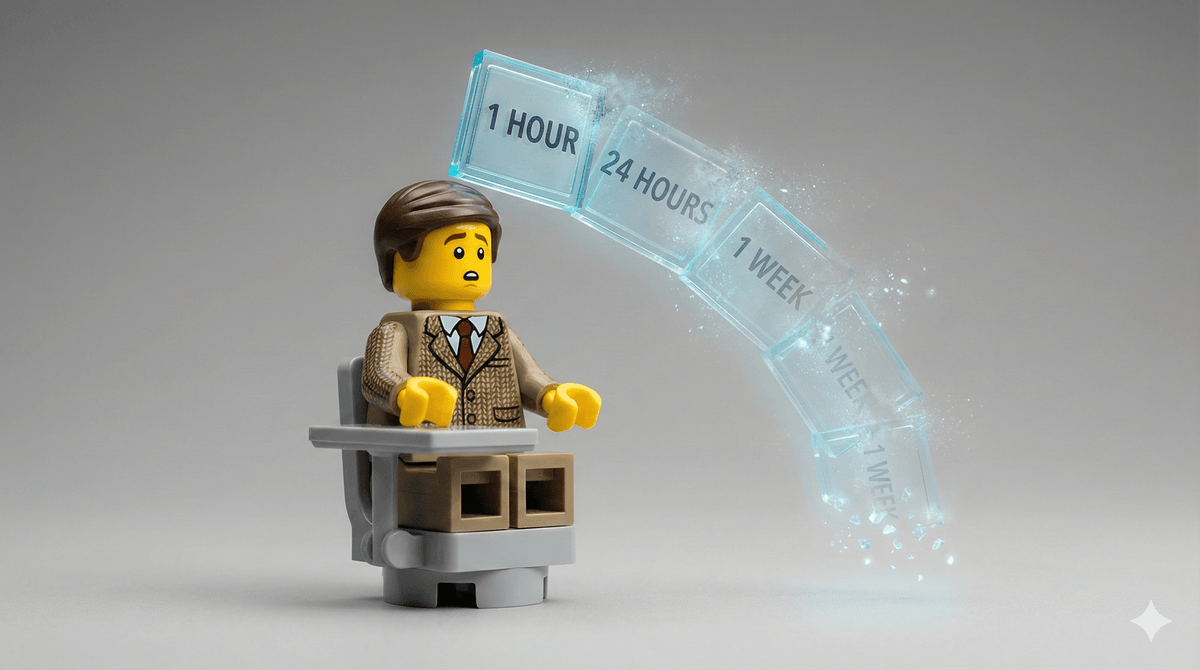
Critics will point out that Ebbinghaus tested himself on nonsense syllables, not meaningful content. Fair. Meaningful information sticks better. But meeting content isn't a TED talk - it's dependency discussions, sprint commitments, stakeholder asks buried in casual conversation. The kind of detail that feels important in the moment and evaporates by the time you're back at your desk. Modern attention span research makes this worse, not better. Our brains are contending with notification pings, parallel Slack threads, and the cognitive load of back-to-back virtual calls that didn't exist in 1885.
So when Huy says facilitation should be "so crystal clear that nobody should forget what got decided" - I admire the aspiration. But human brains don't work that way. Not for a 15-minute standup, and certainly not for an hour-long refinement about a system migration that touches six microservices.
The claim that perfect facilitation eliminates the need for records isn't a coaching philosophy. It's a denial of how memory works. And it confuses the job. My role as a Scrum Master isn't to be the note-taker. It's to create the environment where the team can be most successful. That means an environment where decisions get captured, intent gets surfaced, questions don't disappear, and action items have owners. I'm not personally responsible for writing all of that down. I'm responsible for making sure the environment supports it. The question is whether that environment includes a tool that handles the capture, or whether we pretend that good facilitation alone makes records unnecessary.
The Sacred Cow in the Room
Jason Gysbers brought the strongest argument. And I don't say that lightly.
"How are you protecting psychological safety when conversations are being recorded?" he wrote. "Even with consent, which is legally required in some states, recording changes behavior... Efficiency isn't our primary responsibility. Creating an environment where hard truths can surface without fear is."
I read that three times. Jason is right about something crucial - recording can change behavior. Not theoretical. Real.
But here's where I push back.
Amy Edmondson, the Harvard professor who literally coined the term psychological safety, defines it as "a shared belief that the team is safe for interpersonal risk-taking." She's also been explicit that it is not "a careless sense of permissiveness" or a mandate for comfort.
Psychological safety means people can take risks. Not that we remove everything that might make someone slightly uncomfortable. Very different things.
And I'm watching something alarming happen in my profession - psychological safety getting weaponized as a blanket excuse to reject any tool, any change, any new approach that introduces even a whiff of discomfort. Forbes and Inc. have both published pieces calling out this pattern: teams using "psychological safety" as a shield to avoid accountability, dodge honest feedback, and resist change.
The Double Standard Nobody Wants to Name

Jason raised the consent issue: "In larger groups especially, 'Does anyone object?' isn't real consent. It's compliance."
Fair. Genuinely fair. Worth sitting with.
But if group consent is insufficient for AI notes, then it's insufficient for every Scrum event. Daily Scrums operate on assumed consent (or team working agreements, if you have them - and you should). Planning sessions operate on assumed consent. Retros - the one event where I don't turn on the tool, specifically because of psychological safety - those operate on assumed consent too.
We don't apply this consent standard to anything else. Only to the new technology that threatens to show us data about how our events actually go.
That's not a principled stand. That's selective enforcement.
What Actually Happened With My Team
I didn't sneak this tool in. I brought it to the team. We discussed it. They agreed to try it. Clear boundaries - retros are off-limits, period.
And what happened? The AI captures notes in real time. It sections them by topic as the conversation drifts. We review them together at the end. It catches the decisions, the intent behind those decisions, the questions nobody wrote down, the asks that got buried in side conversation. All of it.
It catches those things while I'm doing my actual job - watching the room, reading body language, managing the timebox, noticing that one developer hasn't spoken in 20 minutes. I'm somewhat technical, but I don't pretend to track every microservice dependency while simultaneously doing all of that. Something has to give. Before this tool, it was the notes.
Oluf Nissen, a coach I respect and worked with on an Agile Coaching Growth Wheel project, said "when you're being recorded, that changes how people show up."
Maybe. But have you ever glanced at a message mid-meeting? Checked your phone? Drifted for 30 seconds while someone explained a dependency you didn't understand? The tool catches those moments. It fills gaps that exist whether we admit them or not.
Ian M. wrote that "these summaries resist clarity and accountability unless explicitly explained." I wonder if Ian has seen the live notes as they're being written. The AI organizes them by topic in real time, and puts notes back into places that make sense - so when the conversation returns to a dependency from 20 minutes ago, the note ends up under the right heading, not buried chronologically where nobody will find it. It tracks action items, tags owners, and groups by agenda topic. Not a generic summary. Structured meeting intelligence. Watching it work live is a different experience than reading a static recap after the fact.
The Inspect-and-Adapt Irony
We are practitioners of a mindset built on empiricism. Inspect the work. Adapt the process. Let data inform decisions, not assumptions.
And yet, when someone introduces a tool that could provide data on meeting effectiveness - not efficiency, effectiveness (thanks to Joel Bancroft-Connors for keeping me honest on that distinction) - actual records of what was discussed, decided, and owned - the community's response is "no thanks, my facilitation is good enough."
That's not inspect and adapt. That's inspect everything except what I do.
Guillaume Bailly was the most honest commenter. He wrote: "I don't think I need such a tool, but see, I haven't tried yet. What's my excuse? I want meetings to remain human. But this is just an excuse..."
Guillaume gets it. He's questioning his own resistance rather than defending it.
Where I Agree With the Critics
I'm not dismissing every concern. That would be lazy.
Recording changes behavior in hierarchical cultures where speaking up carries career risk. Jason is right about that. In organizations where trust is broken, a recording tool amplifies the dysfunction rather than fixing it.
Consent in group settings is genuinely complicated. "Does anyone object?" in a room where the VP is present isn't meaningful consent. That's a real problem worth solving with better rollout strategies, not a reason to reject the tool entirely.
And facilitator skills matter. Huy isn't wrong that great facilitation reduces noise. He's wrong that it eliminates the need for records. Those aren't the same argument. I've run events where my facilitation was genuinely tight enough that the team walked out aligned - and then two days later, nobody could agree on what "aligned" actually meant. The memory faded. The intent stayed. The specifics didn't.
The $6.5 Billion Question
The enterprise AI meeting assistant market is projected to exceed $6.5 billion by 2026. Over 60% of Fortune 500 companies have adopted Microsoft Copilot. Seventy percent of organizations with Copilot enabled use it specifically for meeting recaps.
This technology isn't waiting for the Agile community's permission. It's arriving whether we engage with it or not.
The question isn't whether AI will change how meetings work. The question is whether Agile practitioners - the people who built careers on helping teams adapt - will lead that change or get dragged into it.
I know where I'm standing.
The Community Responds
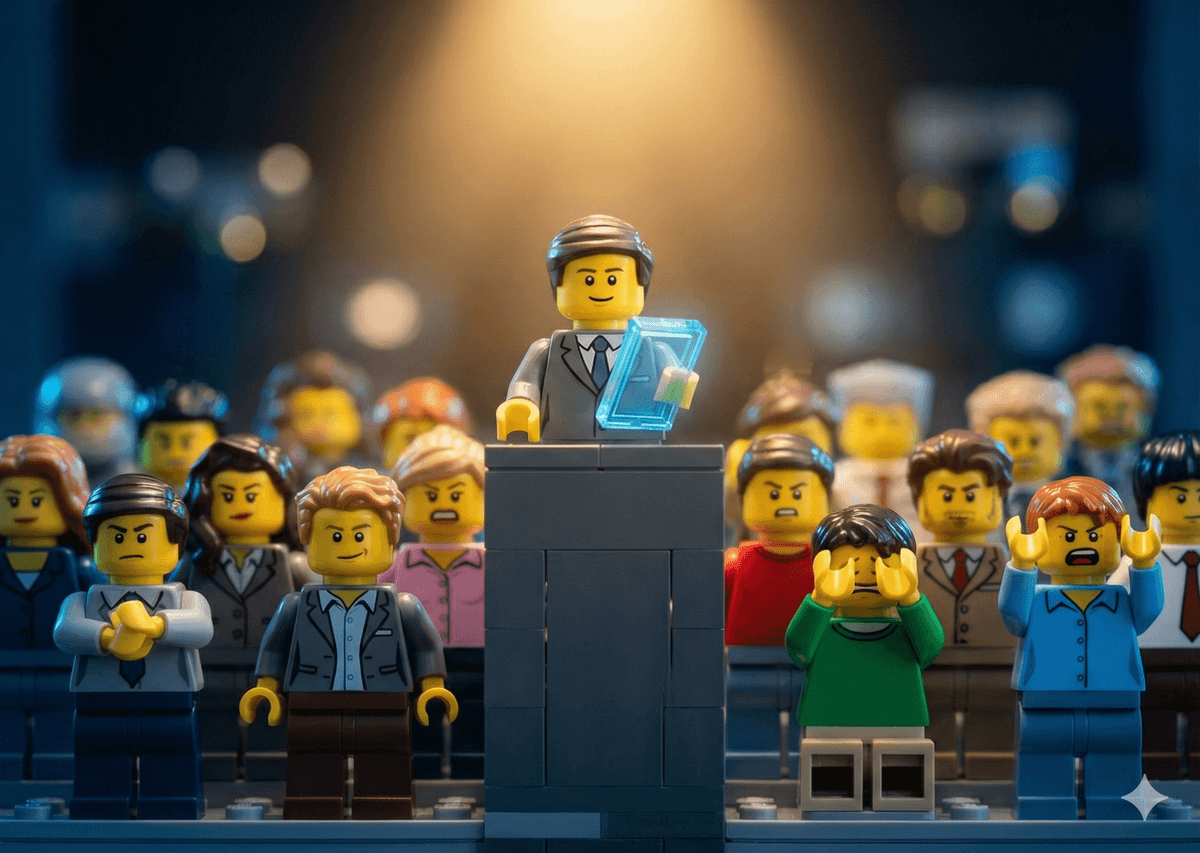
Not everyone came with pitchforks.
Francesco Bianchi quoted a line from my original article back at me: "The pattern is this: the people paid to help organizations adapt are the last ones willing to adapt themselves." Then he added: "Thanks for calling out one more hypocrisy." That line landed harder the second time.
Randall K. offered a theory worth repeating:
"Those Scrum Masters are most likely pigeon-holed into the industry-wide misunderstanding of their specific role and feel that if their most mundane tasks are taken away, then they'll no longer have anything to do, and therefore manifest their own destiny of 'AI is taking our jobs.' I've been an Agile Leader for a long time and have seen many a glorified meeting scheduler that couldn't coach a kid's t-ball team, much less a team of grown adults in charge of delivering high $$ solutions. Running Stand Ups is easy, as 'they' say, anyone can do it. Coaching isn't and not everyone can."
Then he asked: "That said, can I see this AI tool?" Curiosity first, judgment second.
Dan Wyks, CEO at ScatterSpoke, put it bluntly: "I think the folks who aren't trying these tools, who aren't leaning into learning how to use them are scared... and are going to be left behind. And I don't want to see that happen." Neither do I.
Kaan Narter offered the most nuanced take in the entire thread. He uses AI in his Scrum events already, and his observation reframed something I hadn't considered:
"I think the barrier isn't fear or laziness. It's that most AI tools solve problems Scrum Masters don't feel sharply enough. 'Taking notes' isn't keeping anyone up at night. Decision fog is. Blocked work lasting 10 days is. Bad refinement that derails sprint planning is. When I turned the AI into a 'Red Team' member during refinement and it started finding logic gaps we would have shipped, nobody needed convincing."
That last part is gold. One developer started using it on his own the next sprint without being asked. No change management workshop. No committee. He just saw the value and moved.
Nathan Dull captured the reaction I've seen in my own teams: "The moment someone actually tries an AI meeting assistant, the reaction is always the same: 'Why was I doing all this manually?' The coaching, facilitation, and human reading of the room don't go away - they finally get the space they deserve."
And Niels Pflaeging, organizational researcher and self-described "management exorcist," responded with a link to his own piece titled "To Get Unstuck, First Renounce That Obsession With Acceptance." His core argument? What he calls "Fixation on Acceptance" - the belief that you need everyone on board before you can move. He cites Prof. Anita Engels of Hamburg University: due to the complexity of individual identities and group dynamics, aiming at universal acceptance is never going to work. The people who get change done bring their own willpower to the game first, which makes other people's acceptance irrelevant.
That hit close to home. Because what I'm watching in the Agile community right now - the insistence that we can't adopt AI tools until every concern is addressed, every edge case handled, every person comfortable - is textbook Fixation on Acceptance. And it guarantees nothing changes.
The Dare
Next Monday, with your team's permission, turn on the intelligent meeting recap in one non-retro event. Just one. Sprint Planning. Refinement. A stakeholder sync. Read the output afterward and ask yourself one question:
Did the AI capture something I missed?
If the answer is yes, then you have to ask what you've been protecting all this time - your team's psychological safety, or your belief that you didn't need the help.
Continue Your Journey
AI Development for Non-Technical Builders: Learn to build and adopt AI tools practically, without needing a CS degree - from meeting assistants to custom integrations.
Free Resources Hub: Explore forecasting calculators, AI guides, and practical frameworks for modern Agile practice.